
-
Direction
Samara Hersch
-
Dramaturgy, curation
Marta Keil
-
Dramaturgy, script
Szymon Adamczak
-
Premiere
24 April 2026
-
Duration
75 min
-
Tickets
Regular ticket: 70 PLN
Concessionary ticket: 50 PLNGroup ticket for groups of 6 or more people: 40 PLN -
Accessibility
Performance for audiences aged 12+
Cast


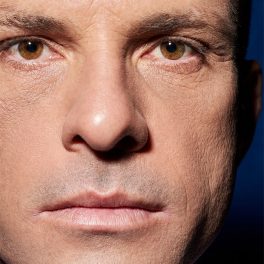
Lea
Fabiś
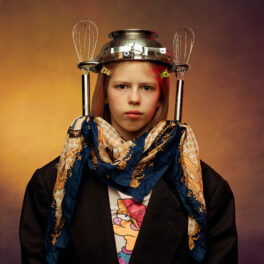
Vincent
Kalita-Porcari
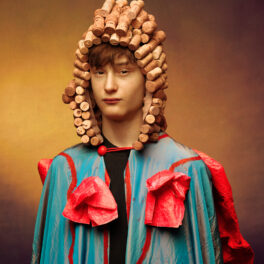
Alicja
Malczewska
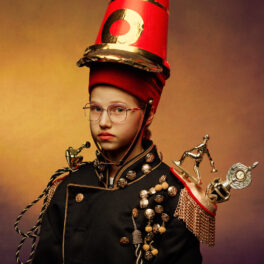
Łucja
Moraczewska
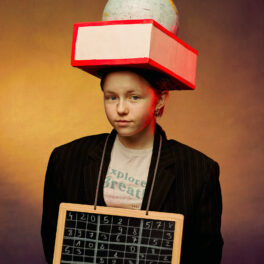
Klara
Olszewska
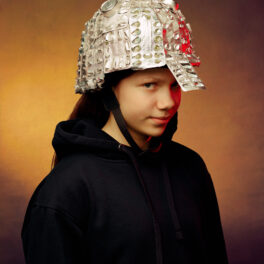
Aurelia
Pawlak
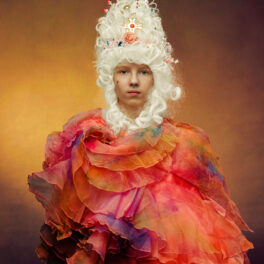
Nina
Rogacka
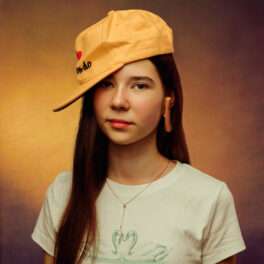
Olivia
Strzępka
About performance
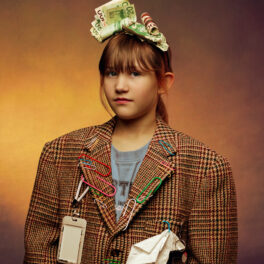
If we are lucky, we are born queens or kings, with adults responding to our every gesture. We discover our power through crying, screaming, or an endearing smile; yet as we grow older, sooner or later we begin to experience our own powerlessness in the world around us, both near and far.
“Power Play” is a work made by children and adults that is not about childhood. Instead it explores the performativity and slipperiness of adulthood. In this encounter, children share the stage with the actors of TR Warszawa. They taste power; delight in its sweet seduction and confront its fragility, terror and ultimate betrayal. The script departs from improvisations between the cast and takes inspiration from “King Matt the First” — a groundbreaking children’s novel by Janusz Korczak, where a ten-year-old boy suddenly becomes king and attempts to correct the mistakes of adults.
At a time when political leaders are increasingly behaving like “children”, what does it mean to rethink the binaries between the child and the grown-up? “Power Play” asks: how is raising a child any different from raising a society? How do we allow children to remain “innocent and free” and who pays the price for this freedom? And, if “adulthood” is the greatest performance of all, then who better to learn from than a cast of professional adult actors?
Creators
concept and direction: Samara Hersch
script: Samara Hersch, Szymon Adamczak, Marta Keil, Solomon Thomas
The script incorporates improvisations from the entire cast —both children and adults.
dramaturgy: Szymon Adamczak
dramaturgy, curation: Marta Keil
associate artist and video direction: Solomon Thomas
set design and costumes: Marta Szypulska
set design and costumes collaboration: Natalia Dziarczykowska
lighting design: Jędrzej Jęcikowski
music: Karol Nepelski
concept collaboration: Aaron Orzech
costumes and props by: Marta Szypulska, Natalia Dziarczykowska, Wiktor Droszcz, Oliwia Repczyńska, Hanna Rosińska, and Julia Wasilewska
illustration (part of the tent interior) by: Marta Szypulska, Natalia Dziarczykowska, Apolonia Chmielewska, and Zbyszek Chmielewski
rehearsal translation and support: Kasia Kania
educational support during the process: Katarzyna Batarowska
assistant director: Wojciech Sobolewski
stage manager: Małgorzata Krawczyk
head of production: Magda Igielska
image used as the base for the poster: Patryk Różycki
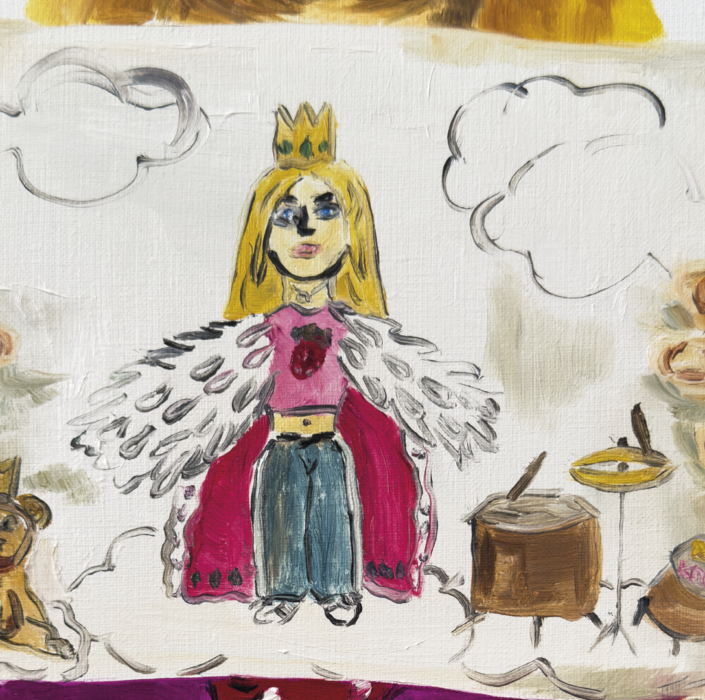
drawing that inspired the poster: Aurelia Pawlak
photos: Adrian Lach
technical manager: Michał Golasa
deputy technical manager: Andrii Pogorielov
sound engineers: Piotr Domiński, Jerzy Szelewicz
video engineer, camera operator in Act 1: Maciej Kaczyński
lighting engineer: Jędrzej Jęcikowski
make-up artist: Dominika Zatońska
wardrobe assistants: Ela Kołtonowicz, Urszula Musiał Kozłowska
propman: Mariusz Basiak
decoration constructor, welder: Tomasz Ciężarek
stage crew: Łukasz Winkowski – crew chief, Marcin Puanecki, Tomasz Trojanowski, Mateusz Bożym, Paweł Iwaniuk
carpenter: Tadeusz Tomaszewski
The performance is created within the program line “Who does the theatre belong to?”, curated by Marta Keil.
Who does theatre belong to?
Marta Keil’s curatorial programme
Theatres, like other art institutions, seem particularly depleted today – and so their employees and artists are. There is never enough time and space for what is one of the fundamental tasks of a public art institution: creating conditions for reinventing (and practising) social relations. We do not seem to have the strength to think beyond the horizon of the crisis, beyond the need to chase the next deadline, solve the current problem and anticipate the next one. In a state of emergency and exhaustion, it is difficult to find the time and energy to experiment with imagination.
But imagining public theatre anew is only possible when it is done collectively. What would happen if we decided to share the process of shaping an art institution with the ones whose voices are not (yet) audible in public debate? How would thinking about theatre change if, for example, we handed over its programming to teenagers for a while?
Who does theatre belong to? is a curatorial programme prepared by Marta Keil, a dramaturge and curator who has been associated with Warsaw for many years and currently lives and works in the Netherlands and Belgium. The programme will broaden the concept of public theatre and explore institutional dramaturgies, asking who the theatre institution actually belongs to, with whom it shares its space and resources, and who has the privilege of deciding its shape.
About the Director
Samara Hersch is an artist and theatre director based in Melbourne, working across Europe, Australia, and Asia. Her practice combines contemporary performance with community-engaged work. She explores forms that can be co-created with people who are not professional actors. In her work, she focuses on human relationships, including intergenerational connections and their significance within a broader social context. https://samarahersch.com
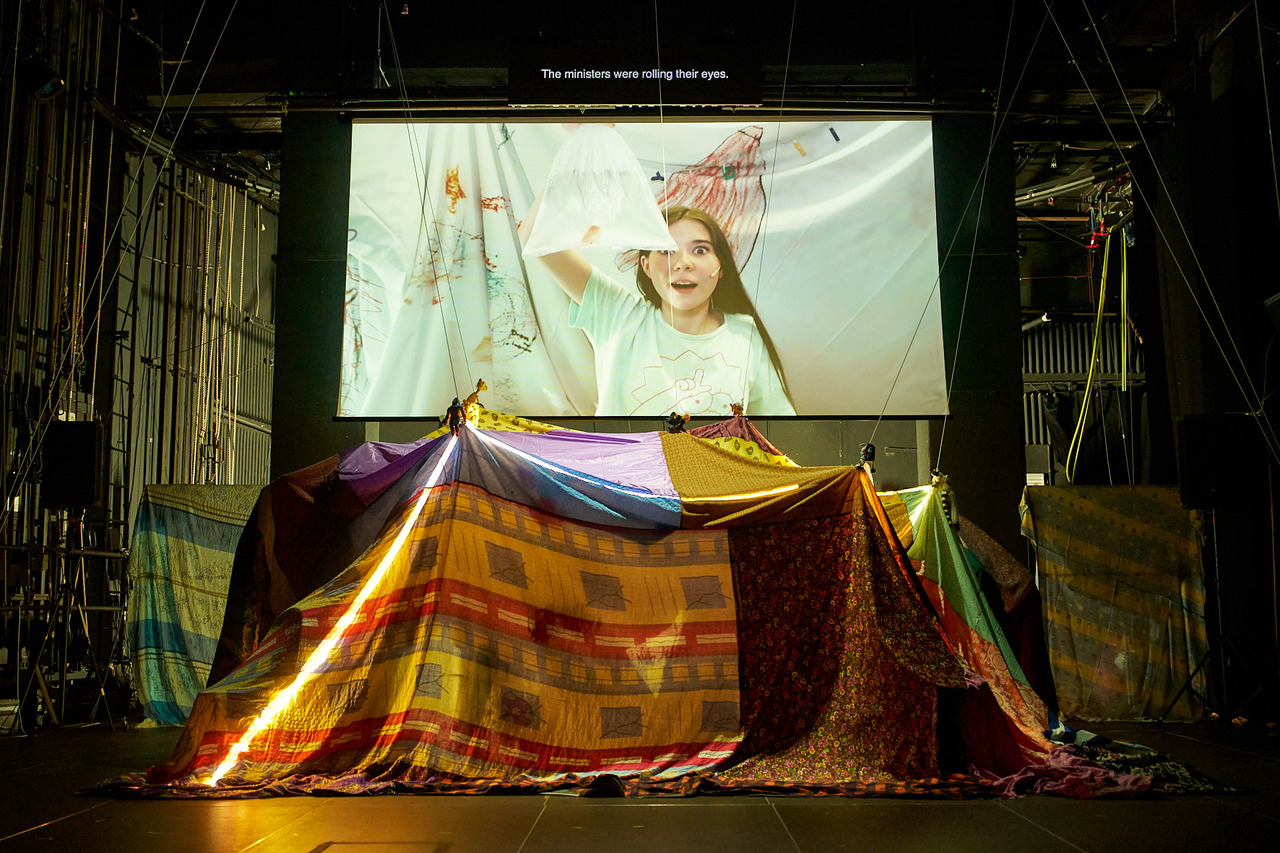
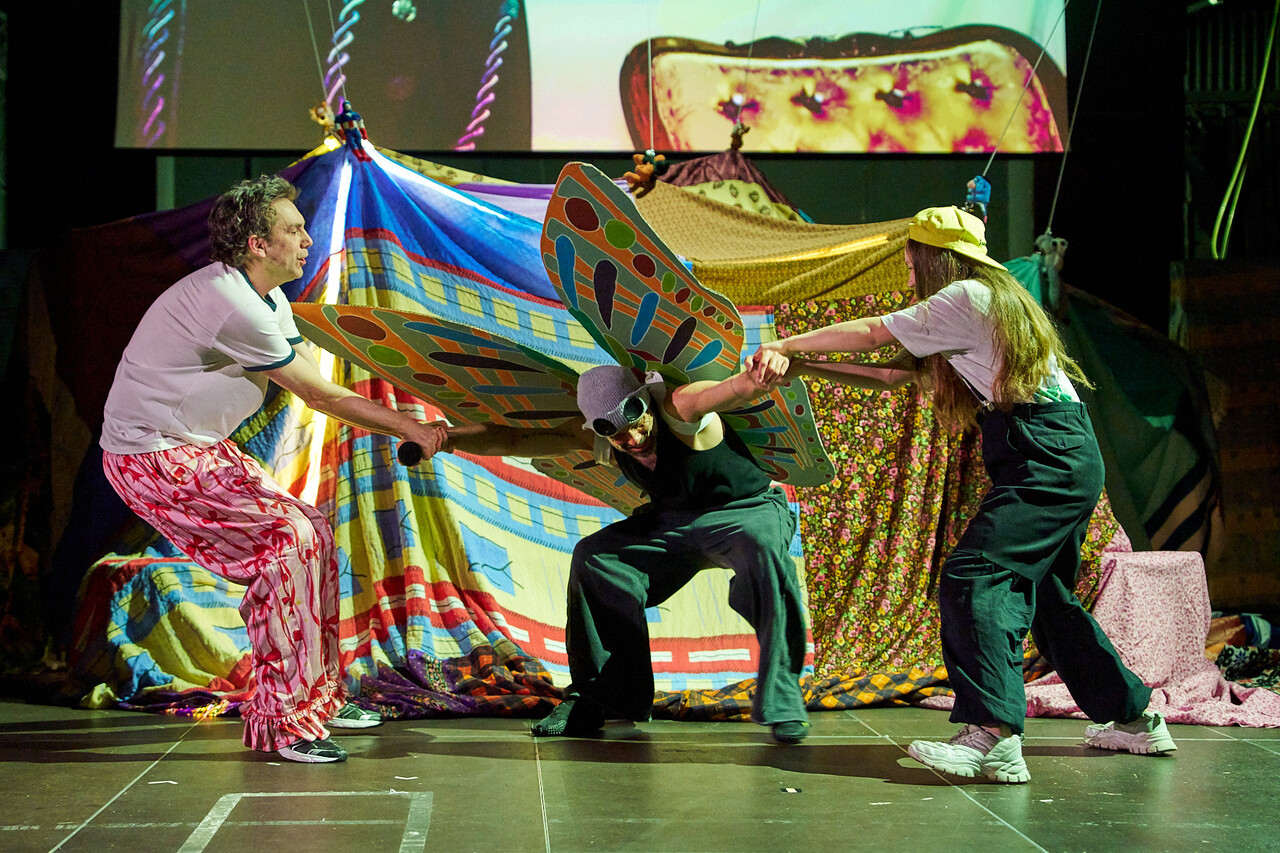
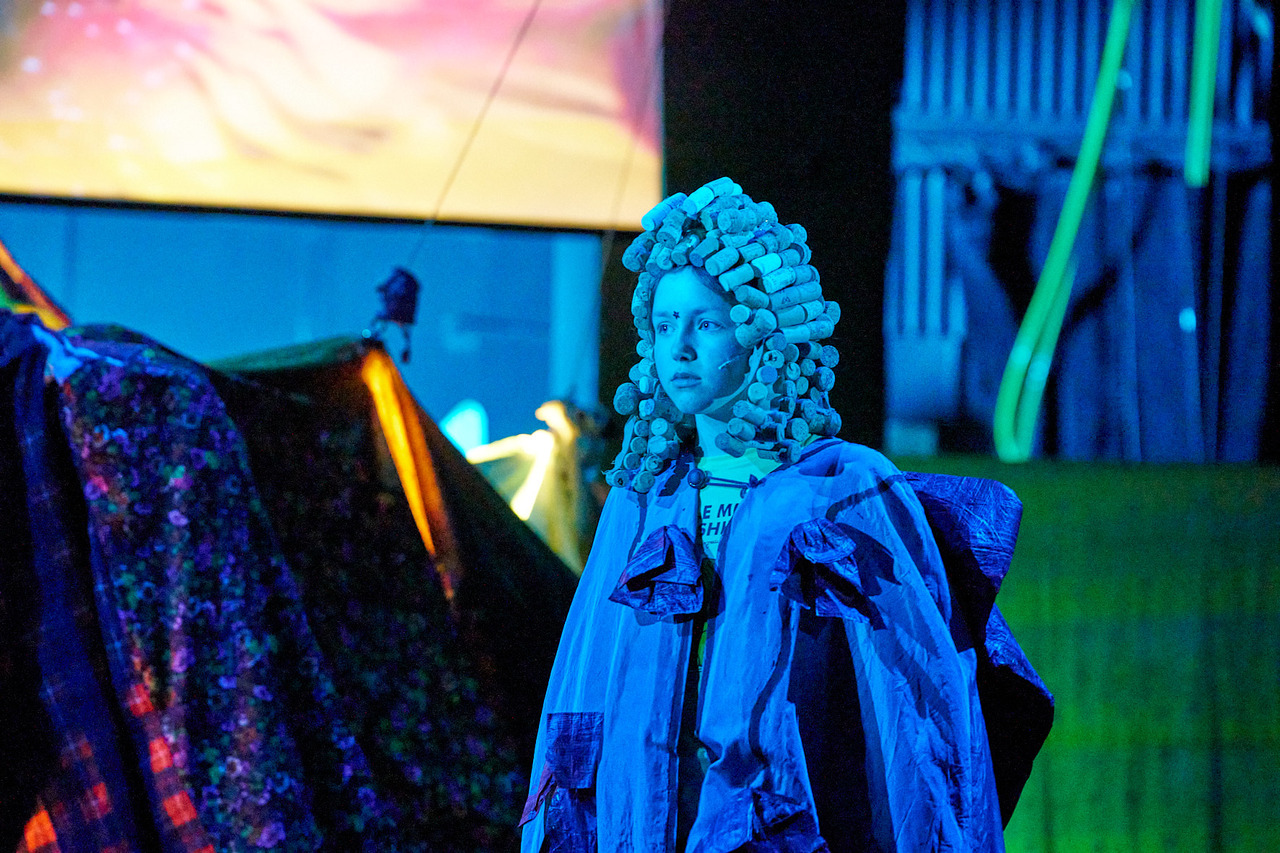
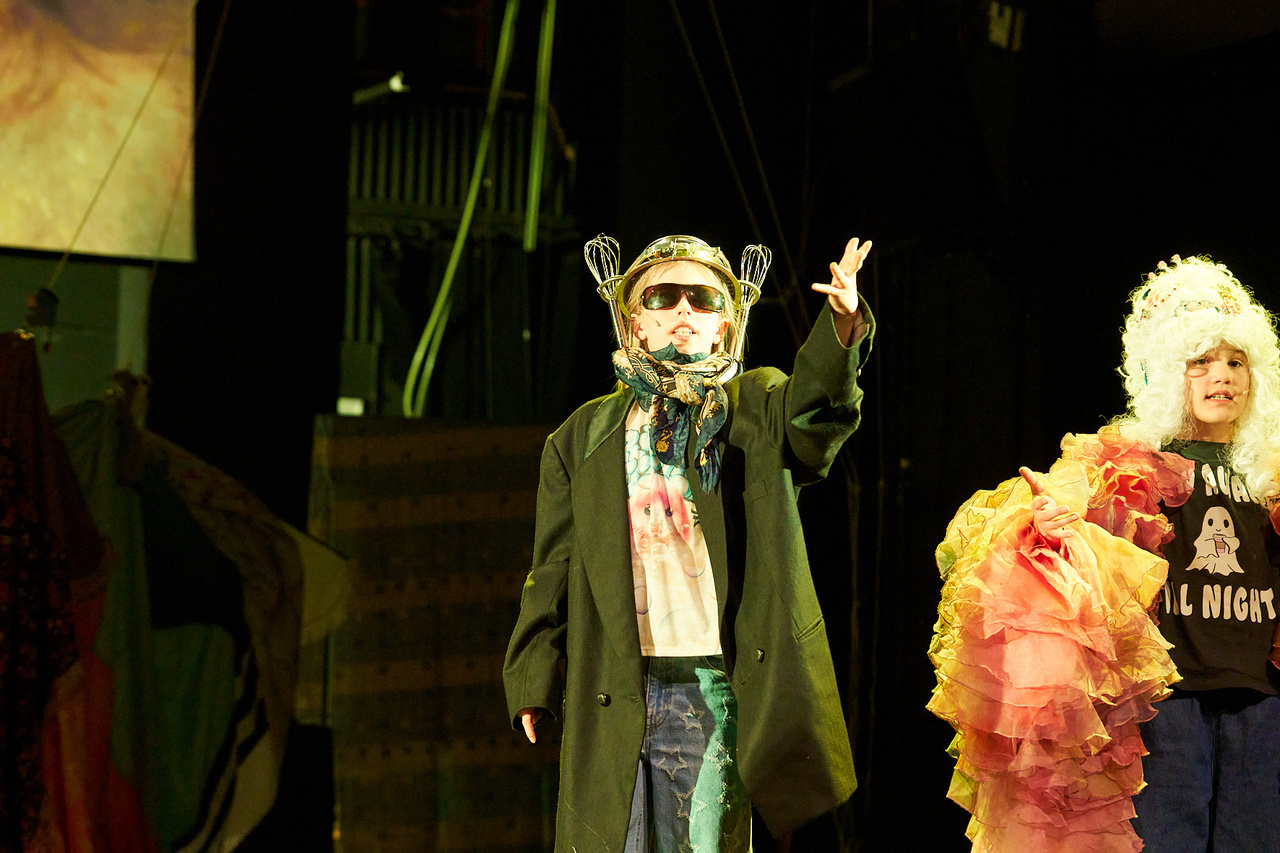
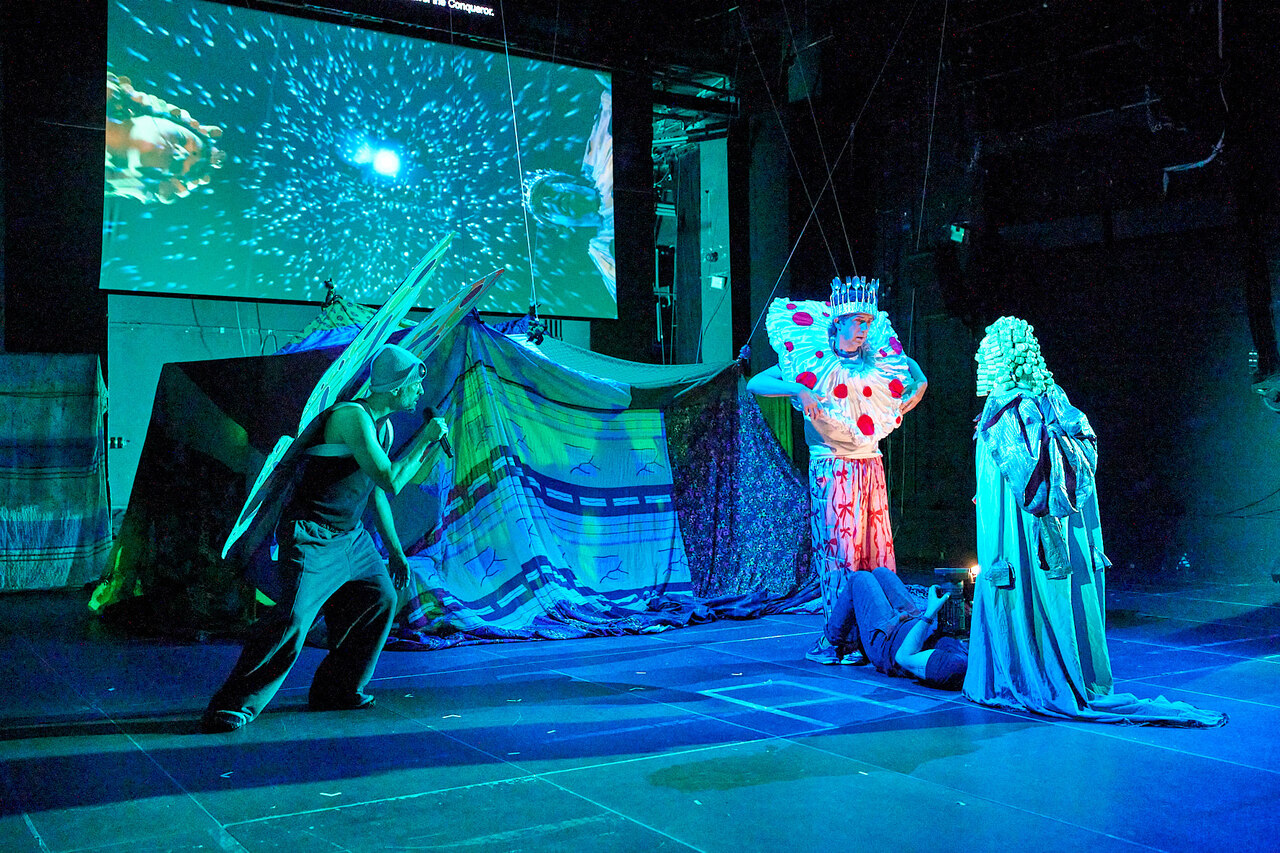
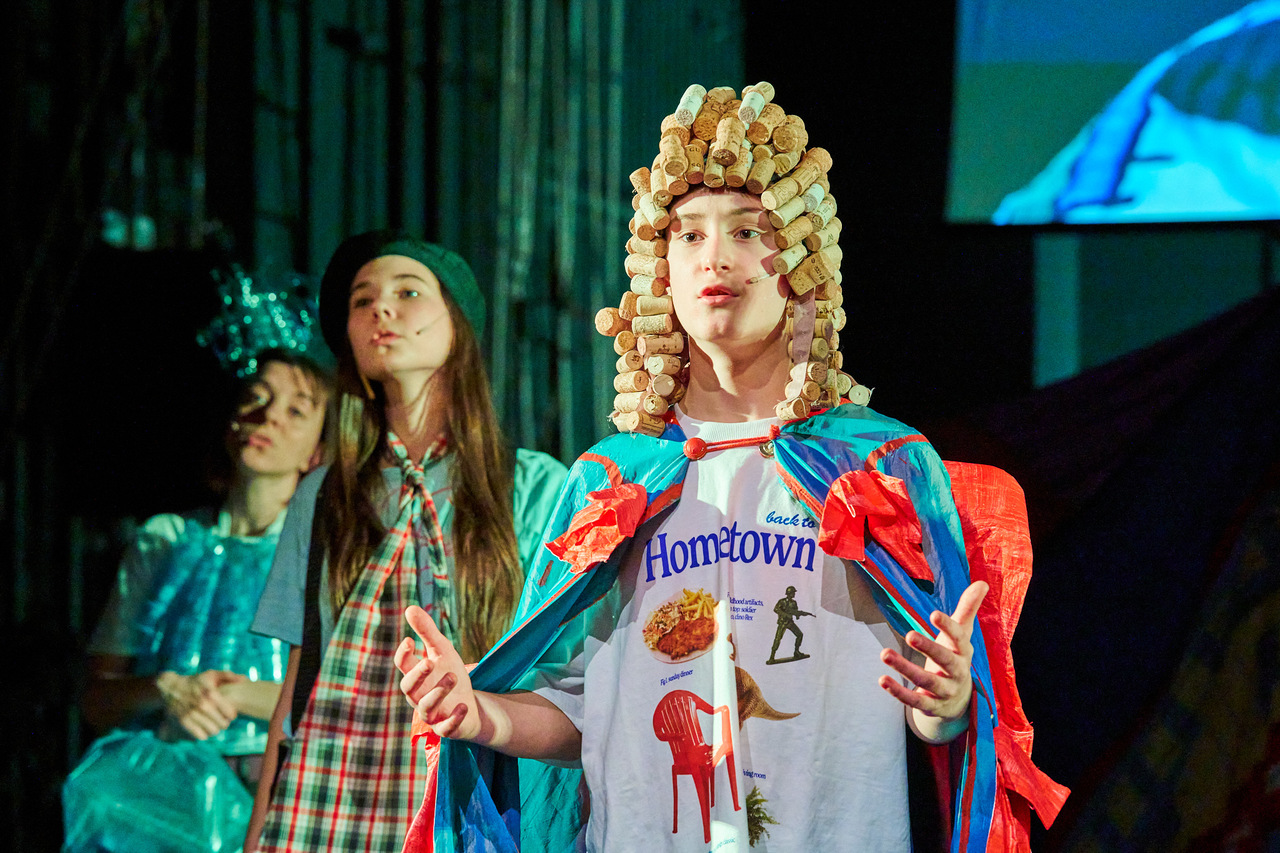
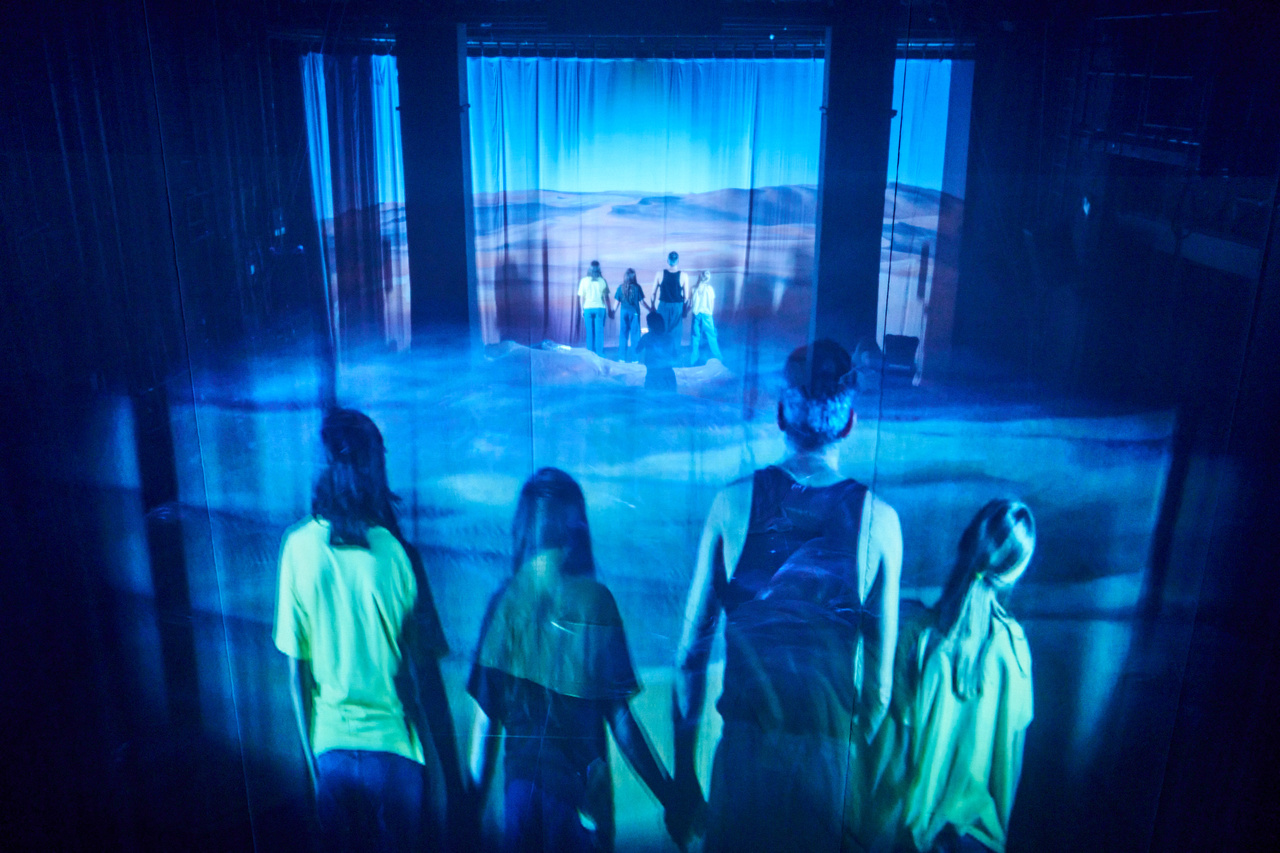
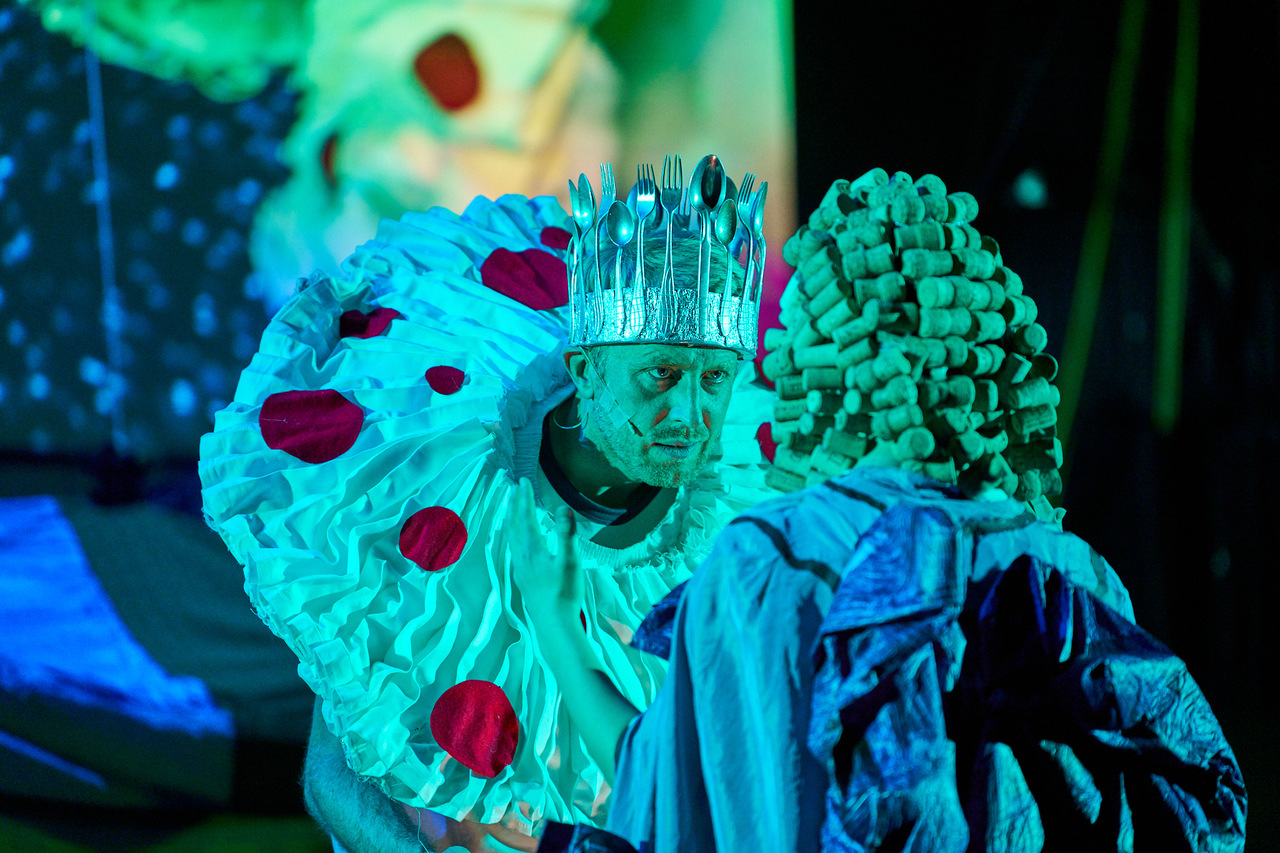
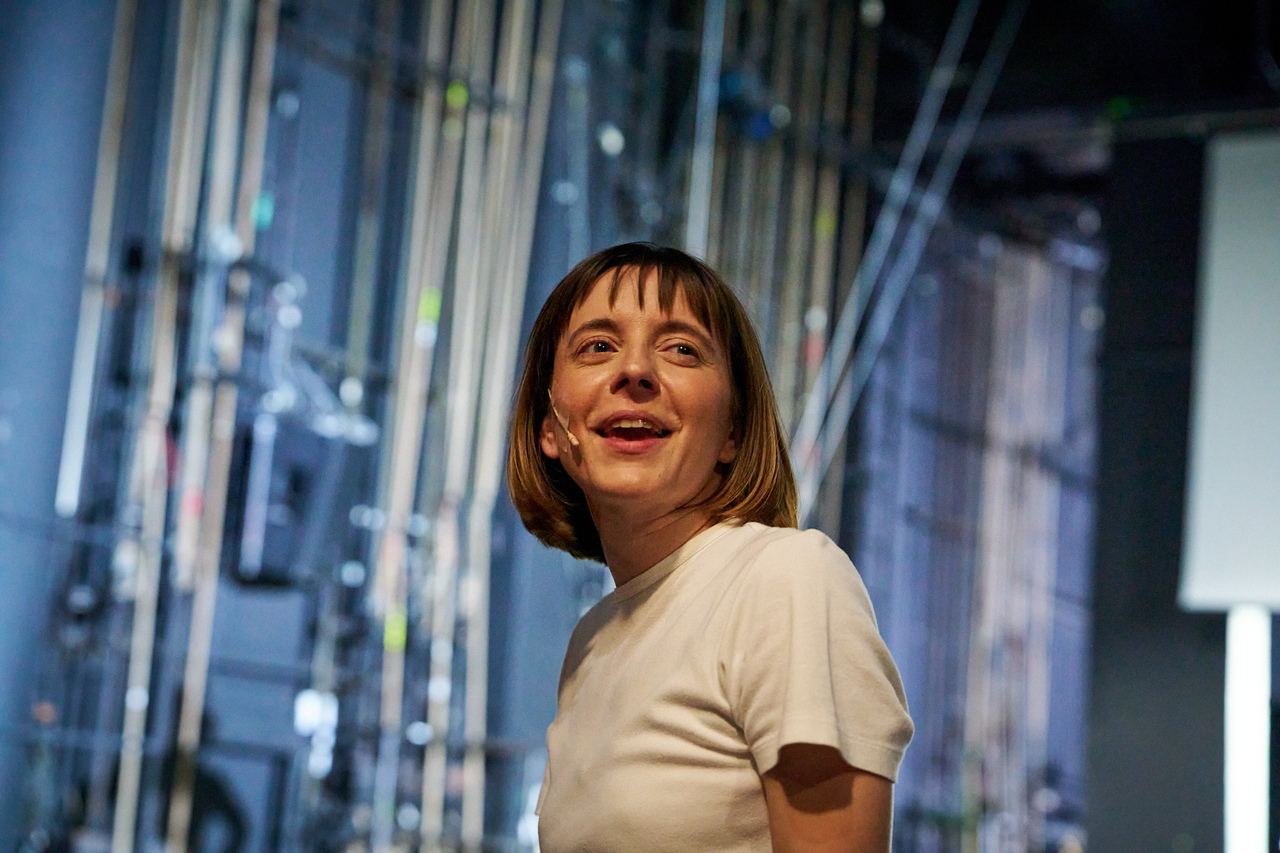
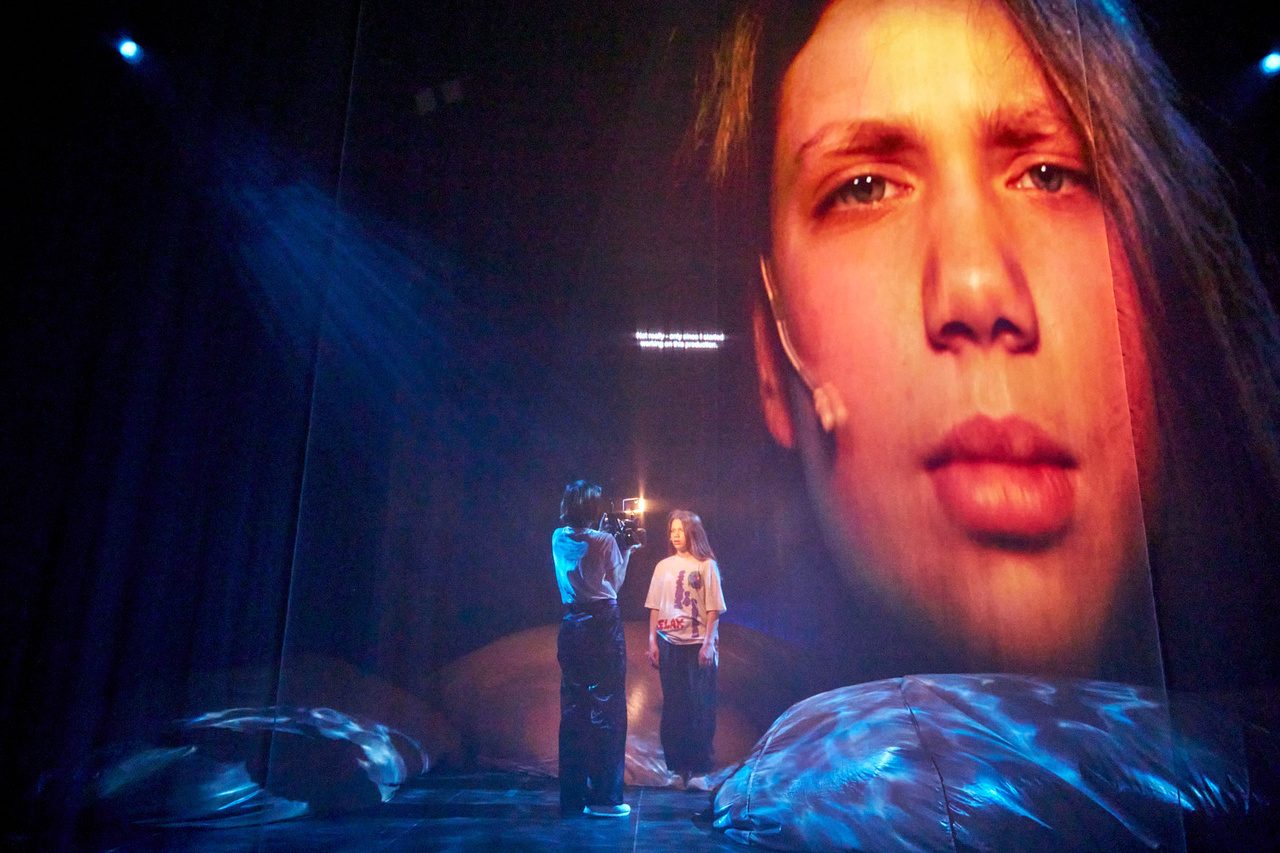
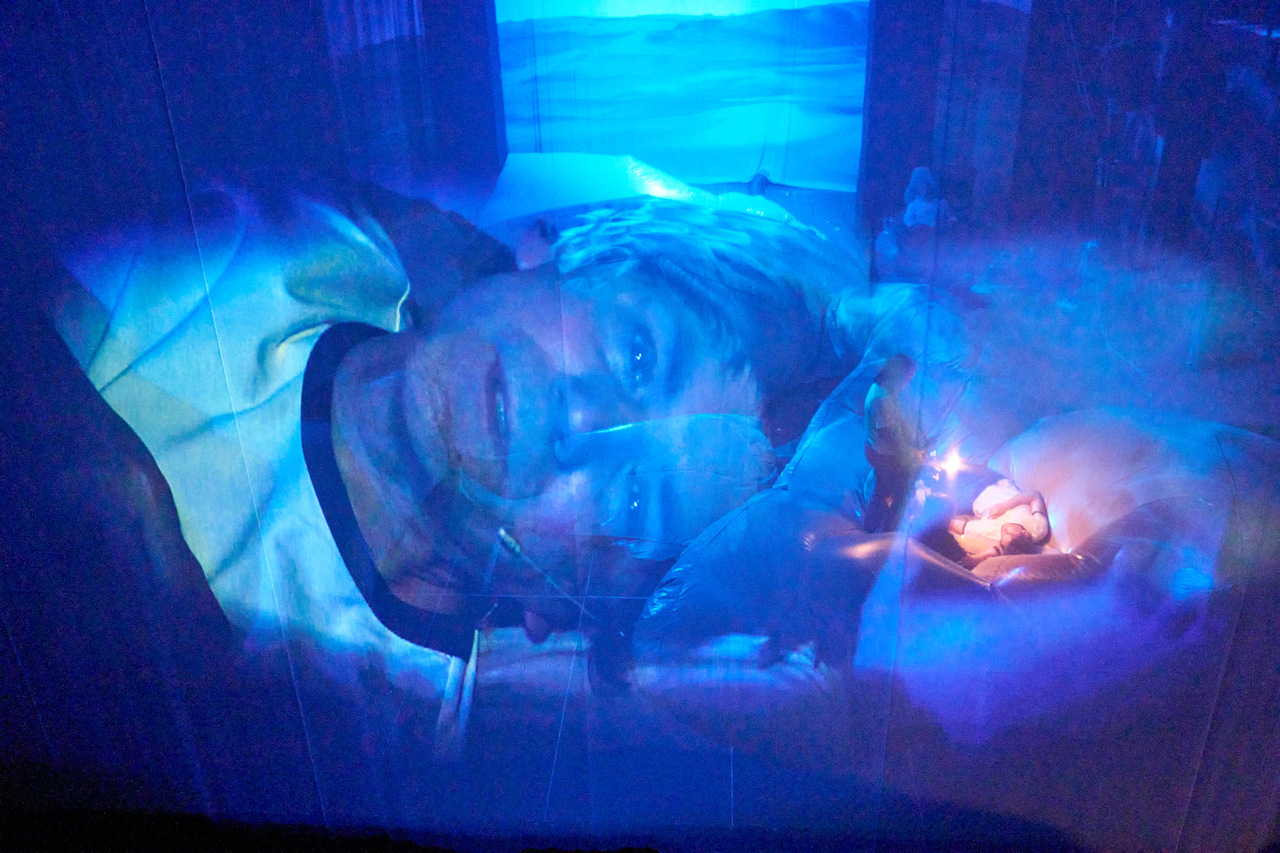
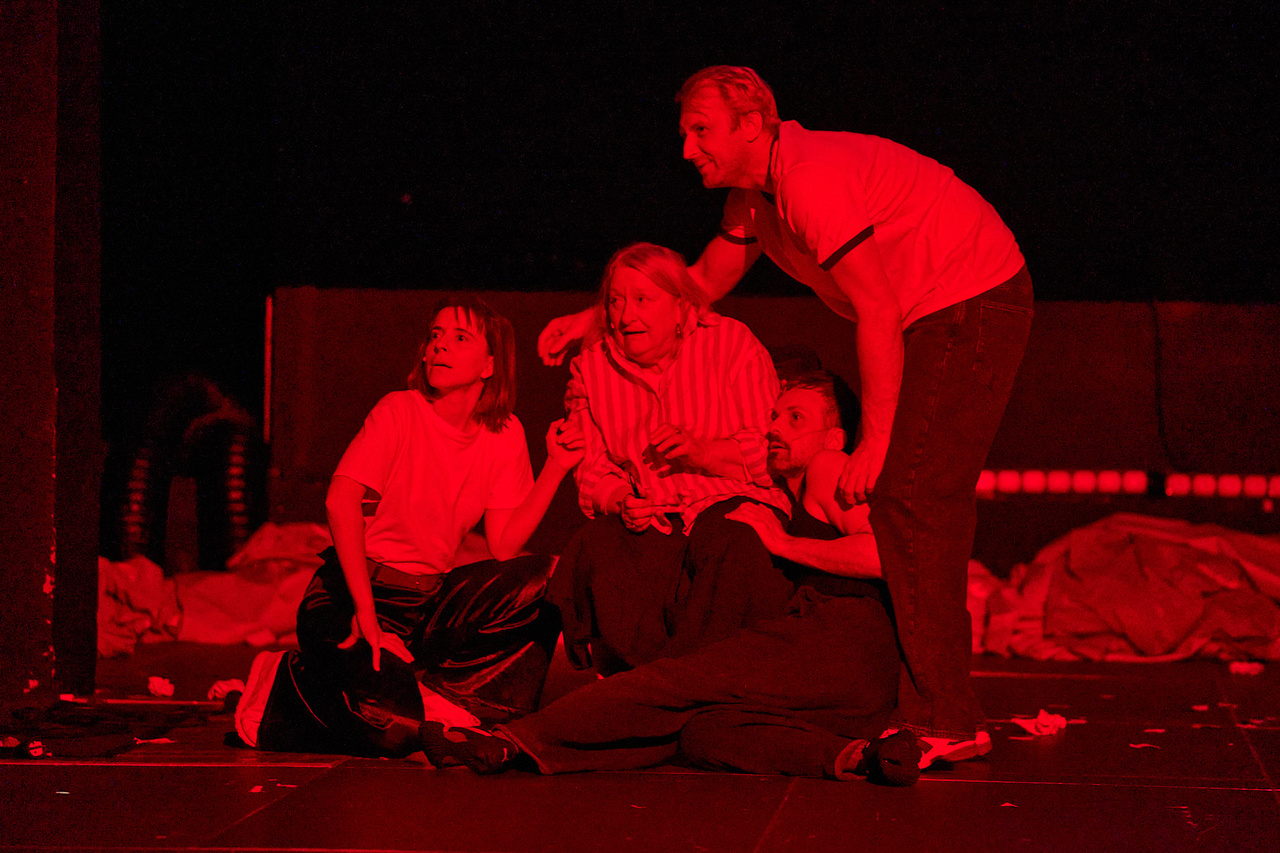
Photos: Adrian Lach
-
Power Play is the best performance featuring children and aimed at a teenage audience that I have seen so far. It departs from the deadly seriousness that all too often characterises theatre for young people, opting instead for an entirely different set of staging strategies. It pays tribute to the boundless imagination of children, placing play at the very heart of the performance.
The production attempts to tackle a wide range of themes at once and, paradoxically, this turns out to be its greatest strength. It is at once a fantasy about handing power over to children and reversing the roles between children and adults, while also exploring the importance of treating one another as equal subjects and of setting healthy boundaries. -
The performance […] demonstrates, with remarkable clarity, how a serious and abstract subject such as power can be explored without sacrificing theatre’s playful vitality.
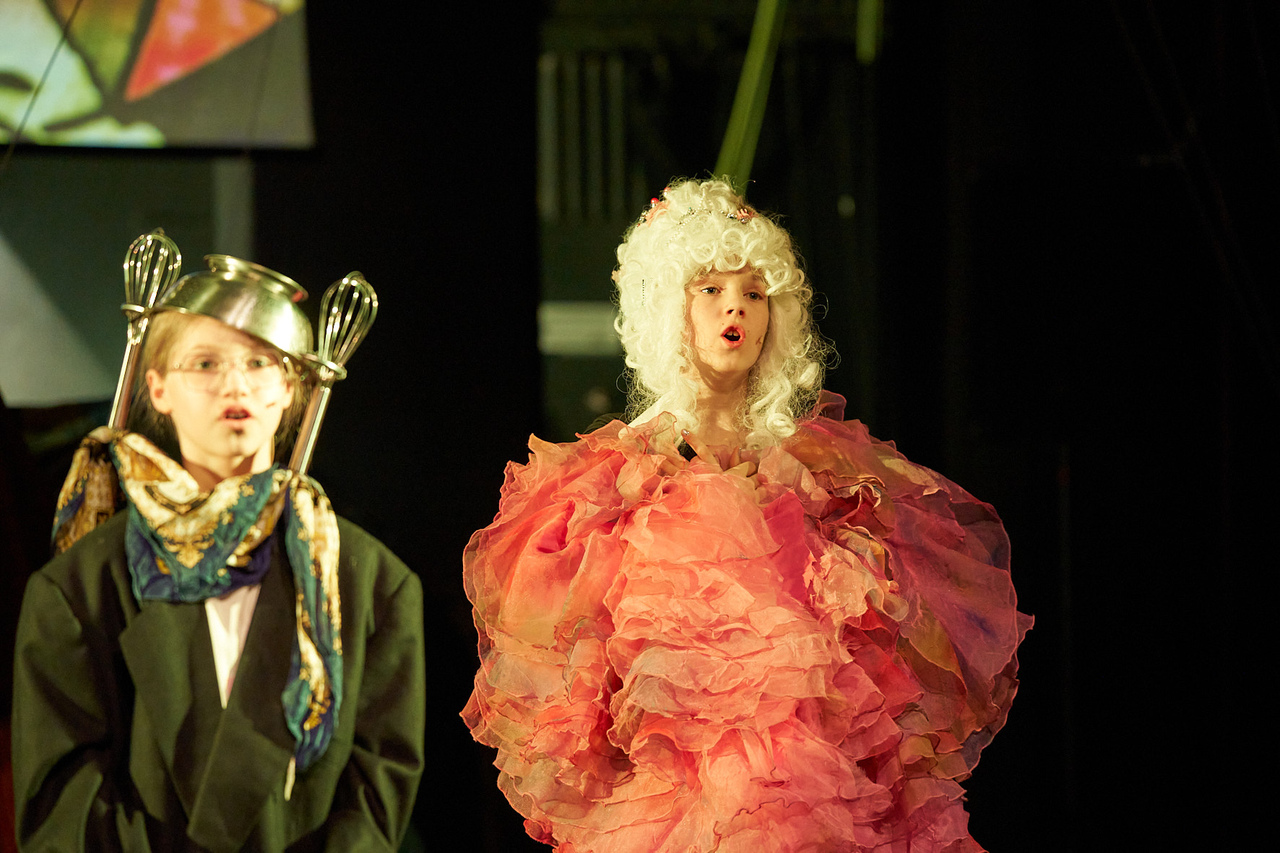
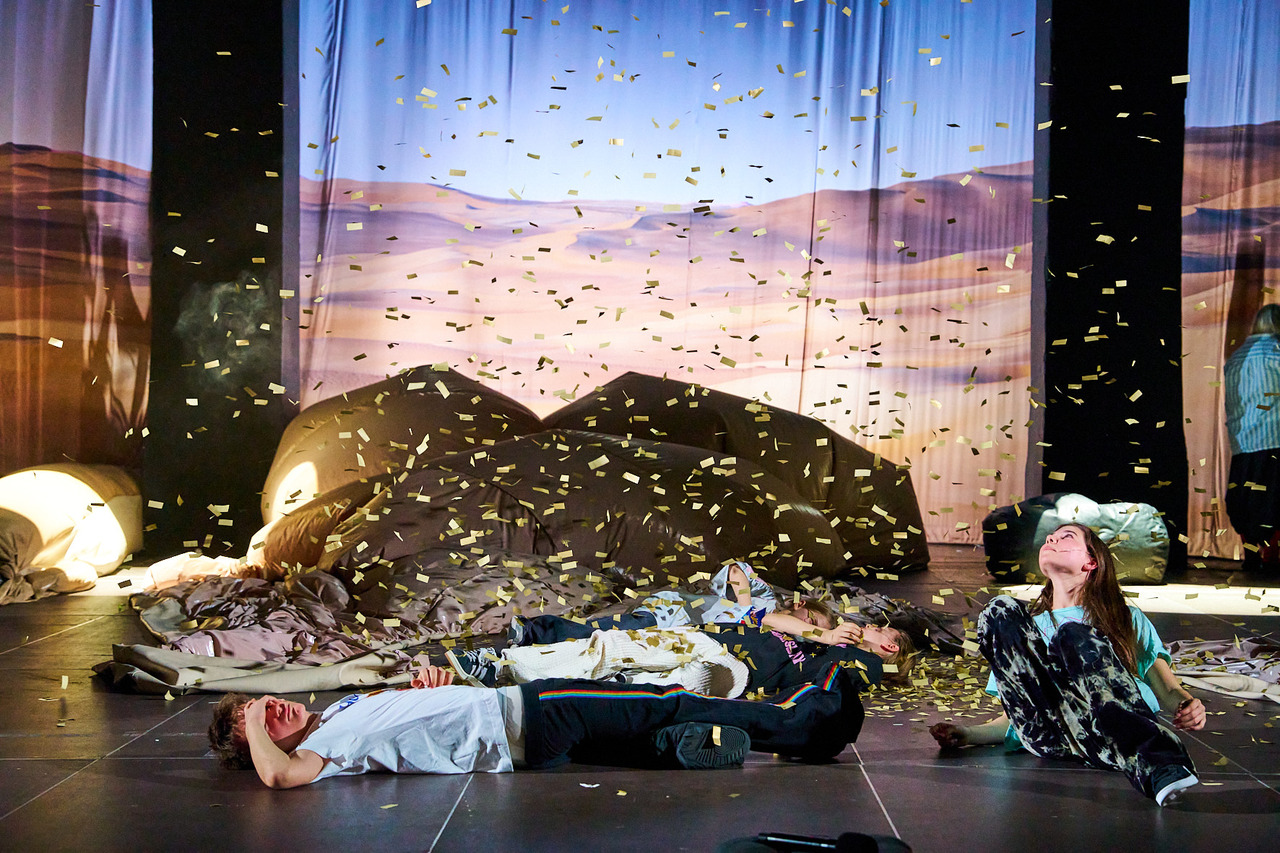
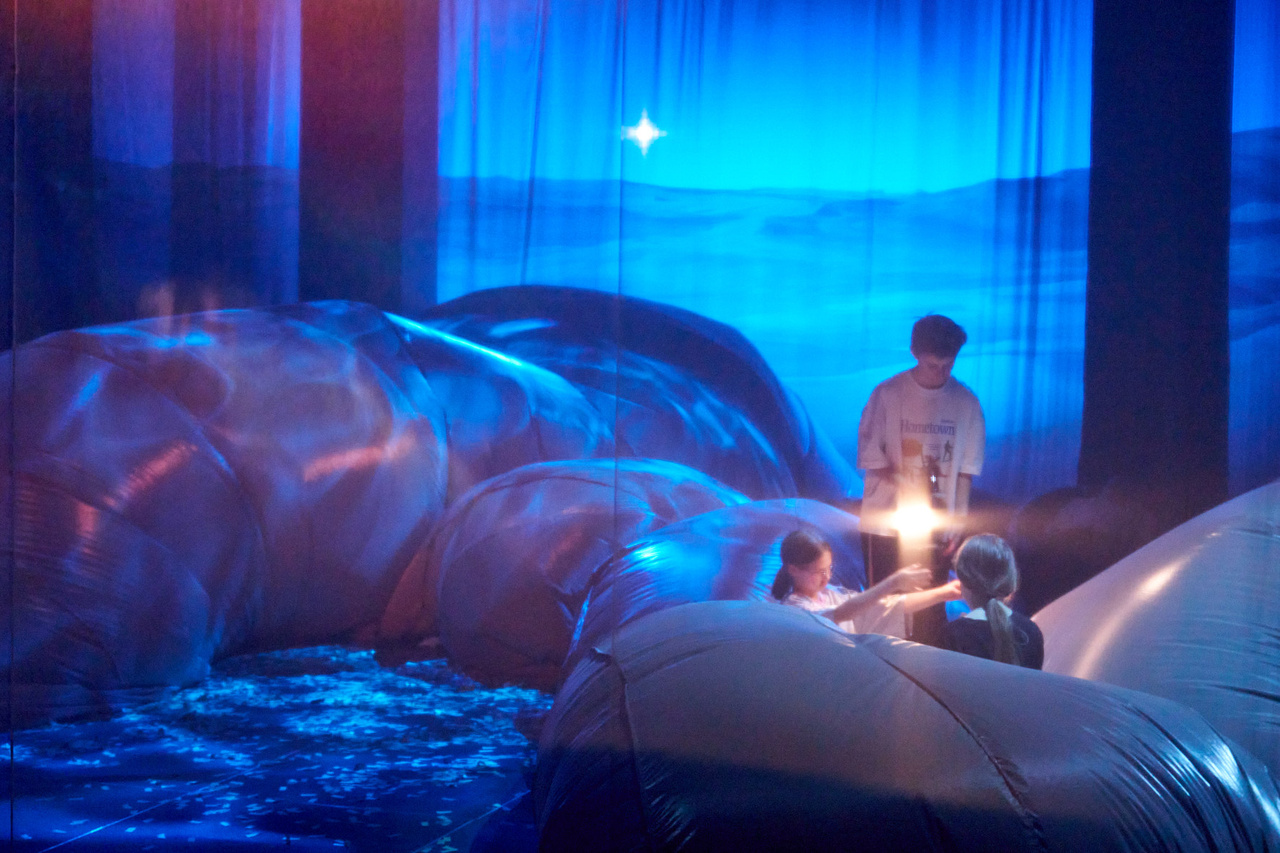
A peculiar “power play” unfolds between the professional actors of TR Warszawa and a group of children. […] Power Play immerses us in a world infused with fantasy, moving from maximalist excess to the emptiness of a bare stage, while grotesque imagery gradually gives way to atmospheric, oneiric landscapes of gently billowing fabrics (set and costume design by Marta Szypulska). By the time we leave the theatre, one impression lingers above all: the playfulness at the heart of the performance was, in fact, a matter of the utmost seriousness. -
Power Play is an experiment successful in every respect. […] Created by Samara Hersch through a process of collaborative improvisation with the performers, the production adopts a variety of theatrical forms to explore the shifting boundaries between childhood and adulthood. It does so with remarkable sensitivity, imagination, and humour, steering clear of moralising or unnecessary pomposity.
Its primary focus is on power and on how an excess of it can go to one’s head, regardless of age. Throughout the performance, power is passed from hand to hand, constantly framed in relation to responsibility, freedom, and openness to dialogue.
The shared stage presence of the professional actors and the young performers creates an intimate yet difficult-to-define relationship, allowing the distinct perspectives and lived truths of different generations to emerge. By inviting teenagers to participate in the creation of its theatrical world, TR Warszawa continues its commitment to an inclusive artistic practice. All that remains for me is to applaud this kind of theatrical experimentation. -
A brilliantly subversive and daring performance about power, submission, representation, and the act of giving others a voice. At its core lies an unprecedented pact of mutual trust, made necessary by the production’s extraordinary improvisation-based collaboration between a professional cast and the children performing alongside them. Both groups navigate this unusual theatrical situation with remarkable confidence, together creating something genuinely new.
The production’s boldness extends beyond its subject matter. For much of its duration, it establishes a strikingly distinctive theatrical language, only to deliberately abandon it at a crucial moment and veer in an entirely different direction—catching the audience completely off guard.
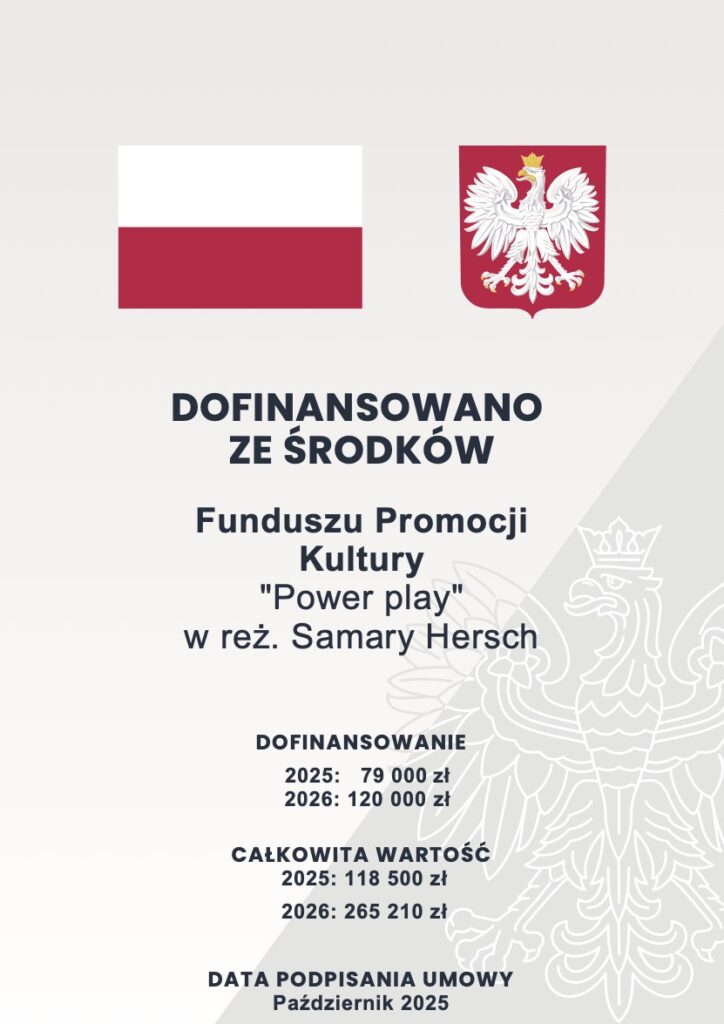
Co-financed by the funds of the Minister of Culture and National Heritage from the Culture Promotion Fund – a state special-purpose fund.
Programme name: Theatre
Project title: “Power Play”, directed by Samara Hersch
Date of agreement: 10 October 2025
Amount of funding: 199,000
Total project value: 383,710

PARTNERS:
The co-producers of “Power Play” are the International Festival of Theatre for Children and Youth “Korczak Today”, the Dublin Theatre Festival, and the Vilnius International Theatre Festival SIRENOS.
PATHRONS: